Safety-critical electronics spans a far broader domain than automotive. Industrial control systems, medical devices, railway signaling, aerospace avionics, and power grid infrastructure all operate under functional safety obligations derived from IEC 61508:2010 Functional Safety of Electrical/Electronic/Programmable Electronic Safety-Related Systems (E/E/PE systems), the parent standard from which ISO 26262, IEC 62061, EN 50128, and IEC 61511 derive. Understanding the legal obligations created by this standards architecture requires both engineering fluency and legal expertise.
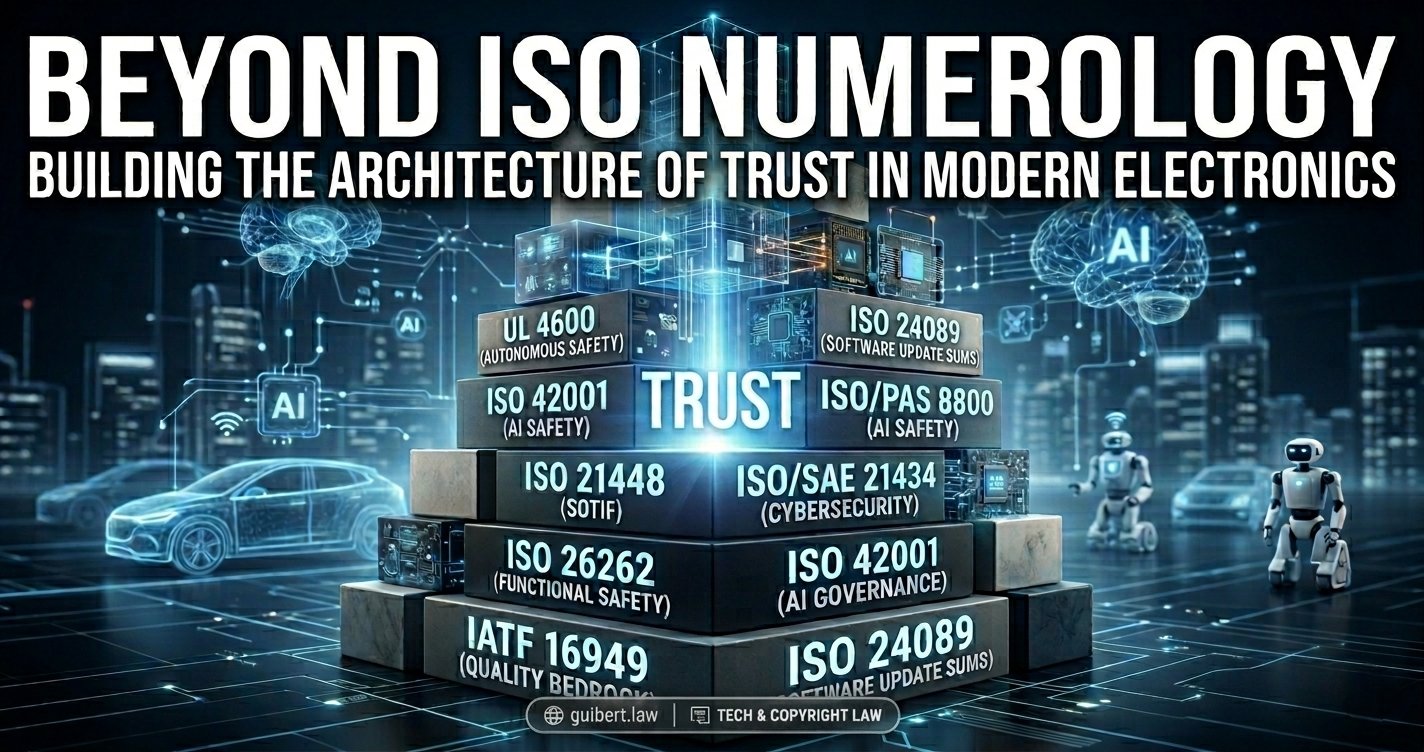
The emergence of on-board artificial intelligence in safety-critical electronics introduces a new layer of legal complexity. Traditional functional safety standards address hardware faults and systematic failures in deterministic systems. AI-powered systems introduce performance limitations, distributional shift, and non-deterministic behavior that existing standards do not fully address. ISO 42001:2023 AI Management Systems and the emerging AI safety standards stack are beginning to fill this gap, but the legal exposure for AI-driven safety failures is already present, and existing product liability frameworks apply regardless of whether the specific AI standard has been finalized.
IEC 61508 Counsel
Legal counsel for E/E/PE safety-related systems across industrial, medical, and infrastructure sectors →
AI-Powered Systems Safety Law
Legal counsel for on-board AI in safety-critical electronics: SOTIF, ISO 42001, and product liability →
ISO 42001 AI Governance Counsel
AI Management System legal counsel and governance documentation strategy →
guibert.law Insight
The distinction between a hardware fault (addressed by IEC 61508) and an AI performance limitation (addressed by ISO 21448 SOTIF and emerging AI safety standards) is legally significant. Plaintiffs in AI-enabled system failures will argue that the manufacturer knew or should have known about the performance limitation, and that the design lacked adequate safeguards. The legal defense strategy for AI-enabled systems must be built from the design phase, not after the incident.
Frequently Asked Questions
- Does IEC 61508 apply outside of automotive?
- Yes. IEC 61508 is the foundational functional safety standard for electrical, electronic, and programmable electronic safety-related systems across all industries. Automotive (ISO 26262), machinery (IEC 62061), railway (EN 50128), and process industries (IEC 61511) all derive from IEC 61508. Any safety-critical electronics product outside those domain-specific standards falls directly under IEC 61508.
- What is the legal status of AI safety standards?
- ISO 42001:2023 is published and provides an AI management system framework. ISO/PAS 8800 (AI safety for road vehicles) is in development. The EU AI Act classifies AI systems by risk level and imposes conformity assessment obligations. For on-board AI in safety-critical systems, the applicable legal standard of care is currently being established through regulatory guidance and early litigation, making proactive legal and engineering strategy essential.