The Legal Problem
On-board artificial intelligence in safety-critical electronics introduces a category of liability exposure that traditional functional safety law does not fully address. IEC 61508 and ISO 26262 are built around deterministic systems: given a defined input, the system produces a predictable output, and the safety function can be validated by exhaustive testing or formal proof. AI-powered systems, particularly those using machine learning for perception, classification, or decision-making, are probabilistic. Their behavior emerges from training data distributions, and they can fail in ways that were not encountered during validation.
The product liability framework applies to AI-powered systems regardless of whether the specific AI safety standard has been finalized. When an AI-driven safety decision results in harm, plaintiff counsel will argue design defect (the system was unreasonably dangerous for its intended use), failure to warn (the developer failed to disclose known limitations), and negligence (the developer failed to meet the applicable standard of care). All three theories are viable against AI-enabled safety systems today.
What guibert.law Delivers
- AI performance limitation liability analysis for specific system architectures
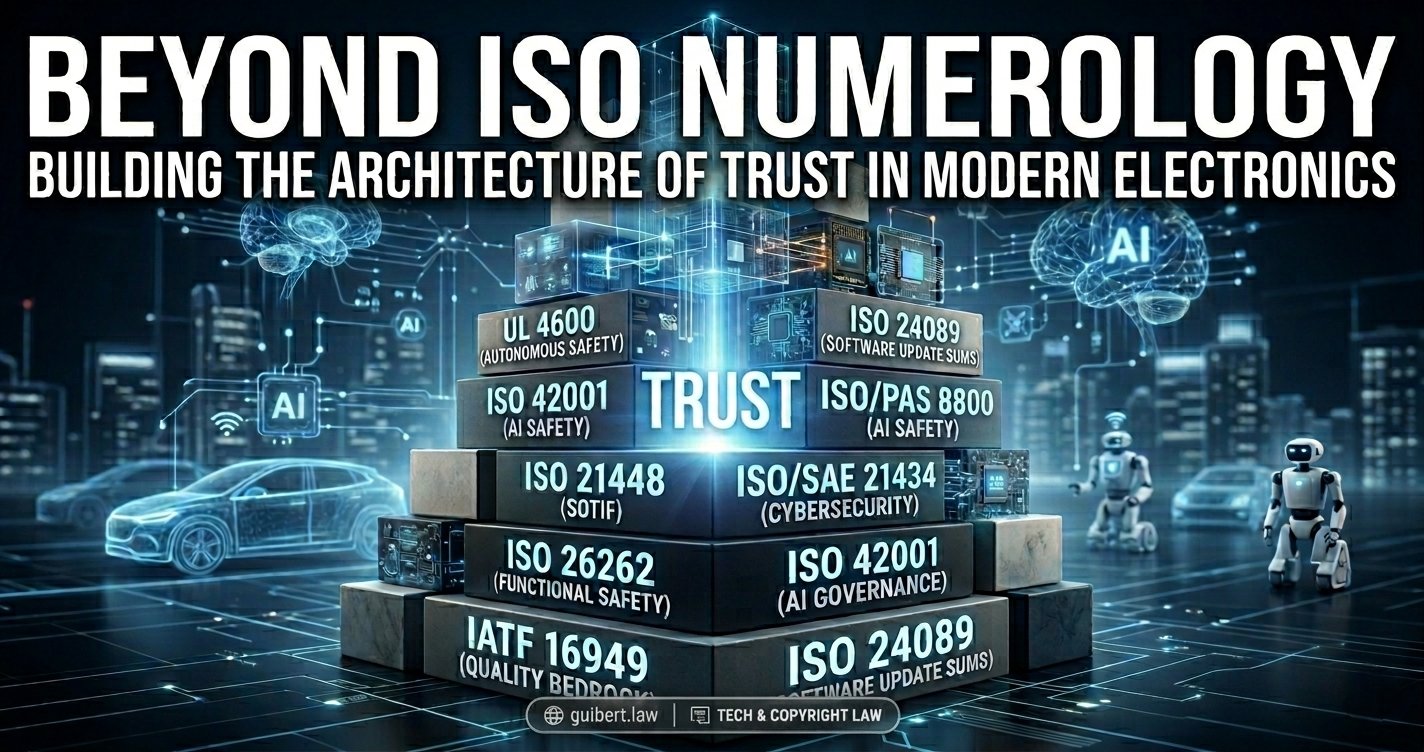
- ISO 21448 SOTIF and ISO/PAS 8800 legal obligations mapping
- EU AI Act conformity assessment obligations for high-risk AI systems
- AI system disclosure strategy (limitations, operational design domain, intended use)
- Product liability defense preparation for AI-involved safety incidents
- Training data governance and documentation for legal defensibility
guibert.law Insight
The operational design domain (ODD) definition for an AI-powered safety system is simultaneously the engineering specification of where the system is intended to operate and the legal boundary of the manufacturer's duty of care. A narrow, precisely documented ODD is a legal defense asset. A vague or expansive ODD, written to maximize market appeal rather than reflect engineering reality, is a liability.