The legal decisions that matter most for a technology start-up are made in the first eighteen months (not at Series A). Entity selection, founder vesting structures, IP assignment agreements, employment agreements with IP clauses, and open-source license audits are the foundation that Series A investors will scrutinize. Getting them right at formation costs far less than repairing them during a financing.
guibert.law advises technology founders who are building engineering-intensive businesses, companies where the product is the technology, where the IP is the core asset, and where the legal infrastructure must be built to support rapid growth and institutional investment. The advice is engineering-fluent: you will not need to translate it for your technical co-founder.
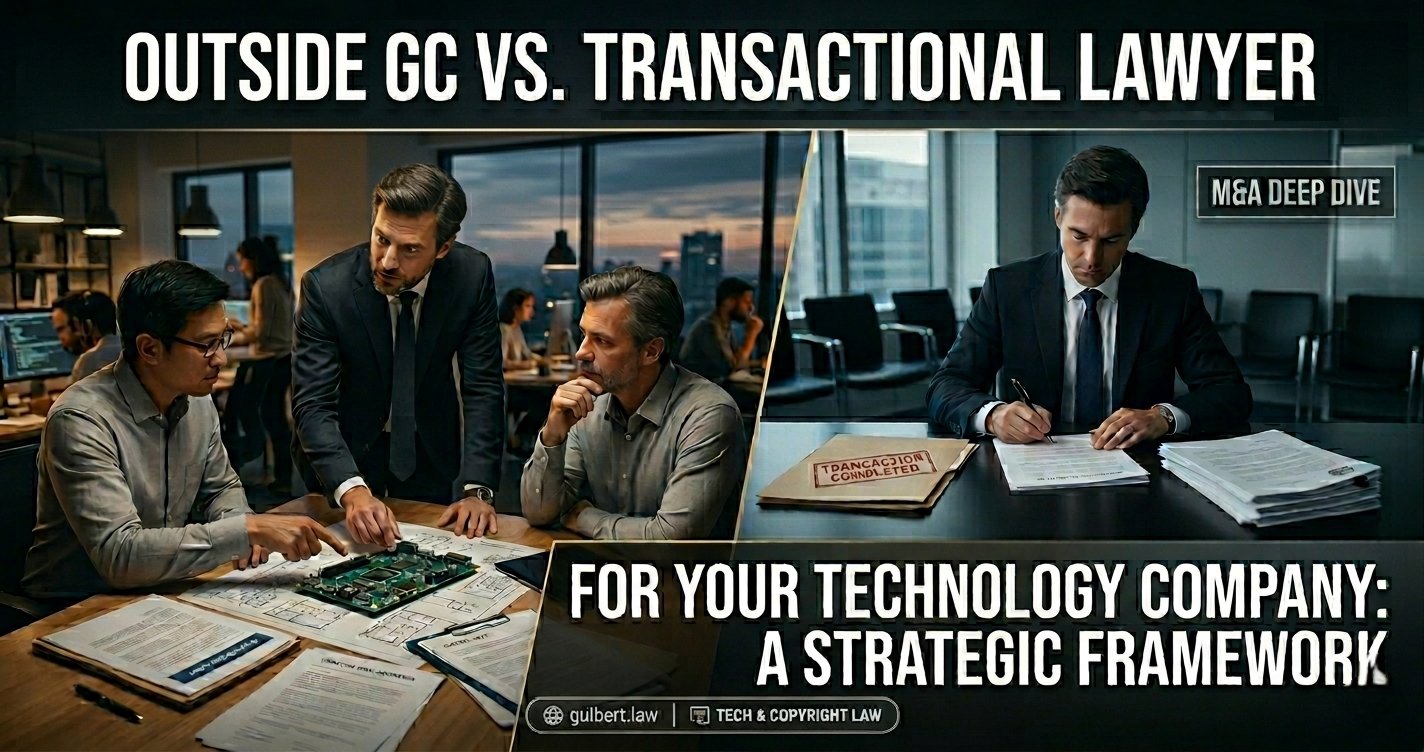
Outside General Counsel
Strategic ongoing legal relationship vs. transactional representation: understanding the difference →
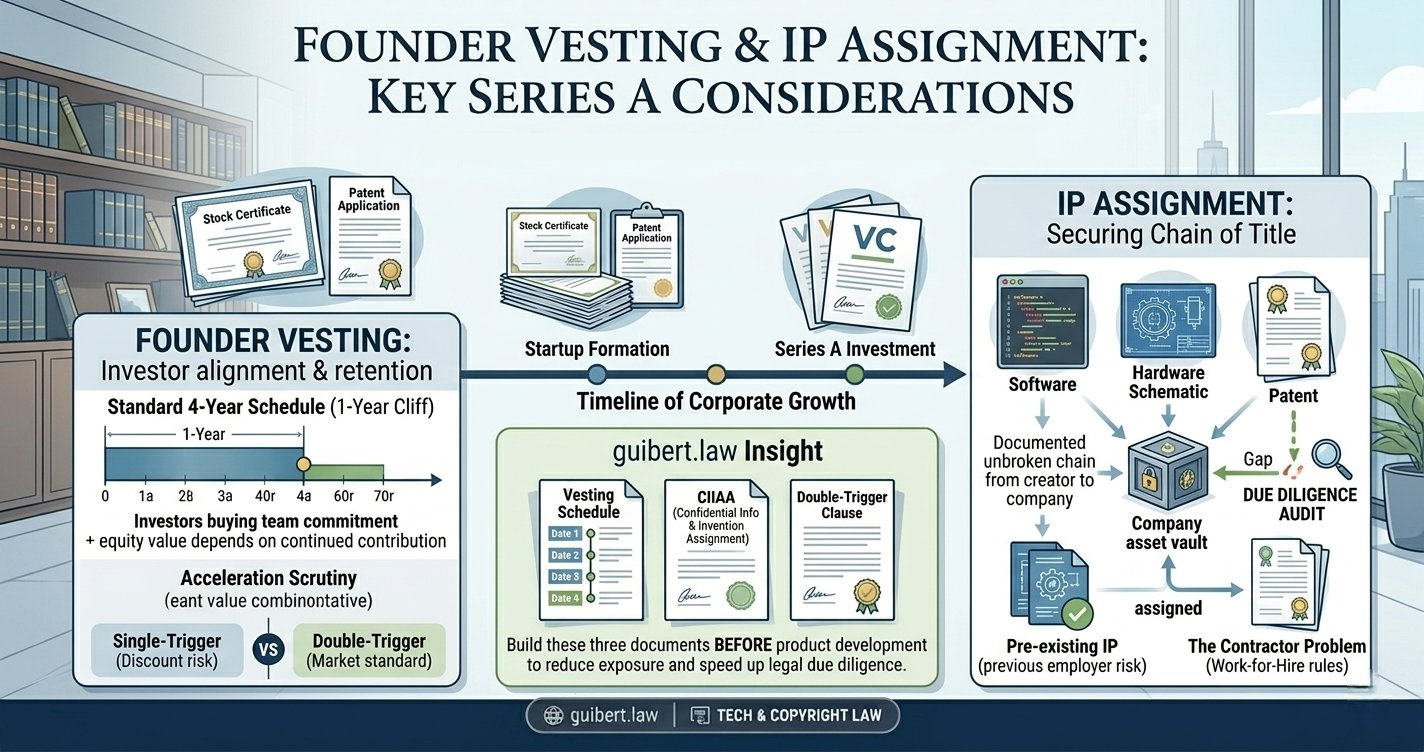
Series A Legal Preparation
IP chain of title, vesting structures, and the legal audit that Series A investors expect to find clean →
guibert.law Insight
Institutional venture capital funds (limited partnerships whose own agreements constrain how they can deploy capital) are structured to invest in Delaware C-Corps. This is not a preference; it is a structural constraint. A technology company incorporated in Wyoming or as an LLC should expect to convert to a Delaware C-Corp before or during Series A. The cost of conversion is real but manageable. The cost of discovering this requirement at the term sheet stage is worse.
Frequently Asked Questions
- When should a technology start-up engage a lawyer?
- The right time to engage start-up legal counsel is at formation (before the first line of code is written with a contractor, before the first employee is hired, and before any founder leaves a prior employer to work on the company). The most expensive legal problems for technology start-ups are the ones that arise from things that happened before the lawyer arrived.
- What is outside general counsel?
- Outside general counsel (OGC) is a strategic ongoing legal relationship in which an external attorney functions as the company's de facto general counsel across all legal matters, rather than being engaged for discrete transactions. OGC is appropriate for companies that have ongoing, cross-matter legal needs but are not yet large enough to justify a full-time in-house counsel.