The Legal Problem
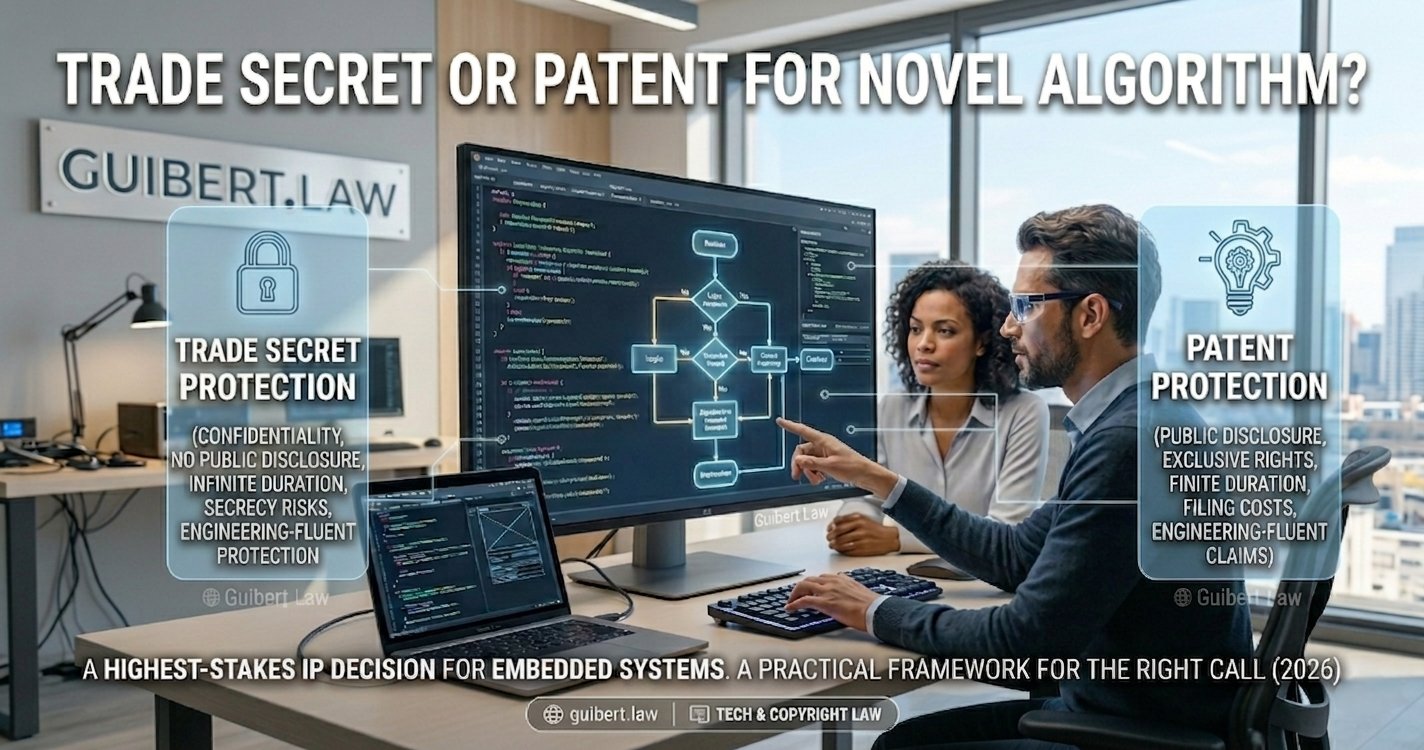
The decision between trade secret protection and patent protection for a proprietary algorithm is not a legal formality, but a strategic business decision with irreversible consequences. Filing a patent application permanently discloses the algorithm eighteen months after filing. Choosing trade secret protection under the Defend Trade Secrets Act (DTSA, 18 U.S.C. § 1836 et seq.) preserves secrecy indefinitely but provides no protection against independent development or reverse engineering from publicly available outputs.
For embedded systems companies, the choice turns on several technical and business factors: is the algorithm reverse-engineerable from the product? What is the competitive lifecycle of the innovation? Does the company need to license the technology? Is the algorithm patentable under 35 U.S.C. § 101 after Alice? Each of these questions requires both legal and engineering analysis.
What guibert.law Delivers
- Trade secret vs. patent decision framework analysis for specific algorithm innovations
- Reverse engineerability assessment guidance
- DTSA trade secret program design: reasonable measures documentation, access controls, NDA strategy
- Patent eligibility analysis under 35 U.S.C. § 101 for algorithm-based innovations
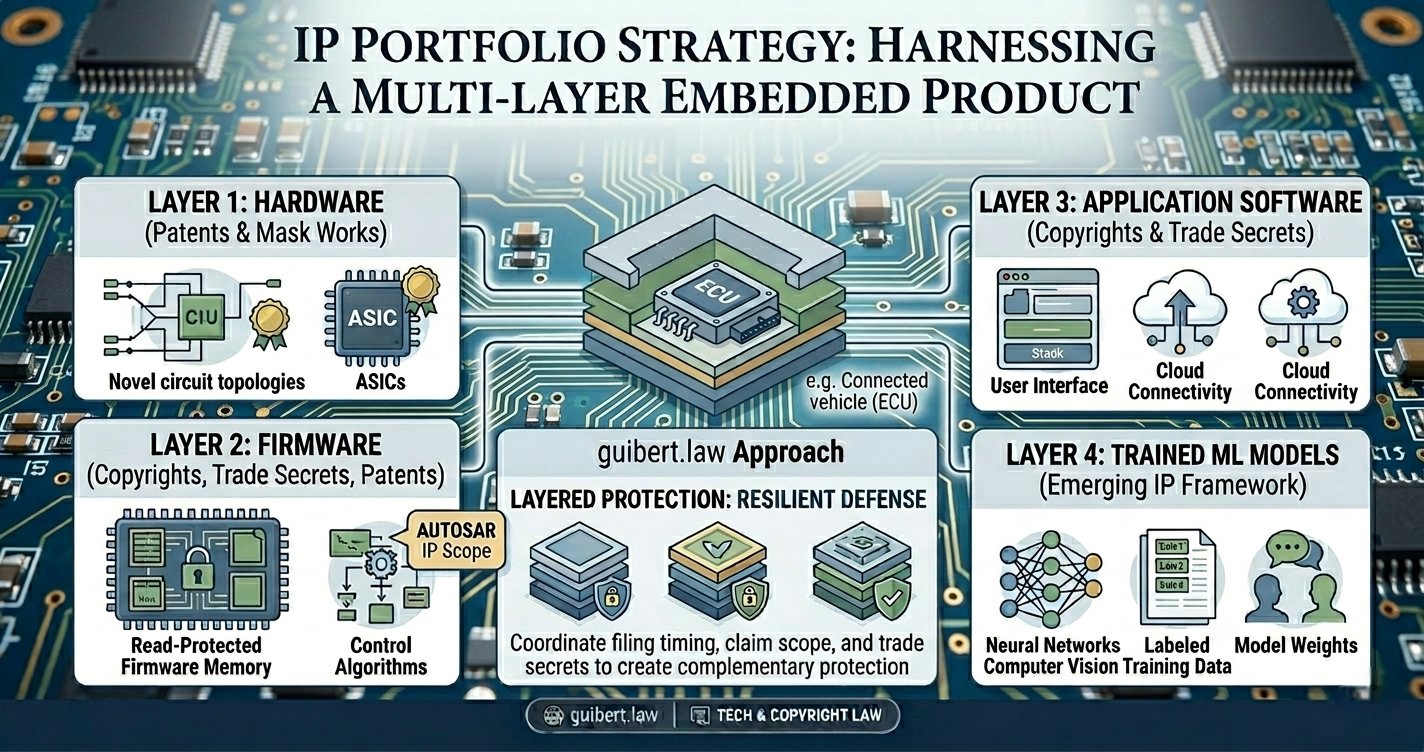
- Hybrid protection strategy (patent the architecture, trade secret the training data and weights)
- Trade secret misappropriation: identification and enforcement counsel
guibert.law Insight
Machine learning model weights are a specific and growing trade secret category. The trained model is an asset distinct from the architecture and the training data. In litigation, courts have generally treated model weights as protectable trade secrets where the developer has implemented reasonable secrecy measures. The critical weakness is the output: if the model's behavior is observable enough for a competitor to reconstruct the weights through model inversion or membership inference attacks, the trade secret claim is undermined.
← Back to Technology IP Strategy