Intellectual property strategy for embedded systems and software companies requires more than knowing patent law. It requires understanding which technical innovations are patentable under 35 U.S.C. § 101, which are better protected as trade secrets under the Defend Trade Secrets Act (DTSA, 18 U.S.C. § 1836 et seq.), and which are already encumbered by open-source license obligations that the engineering team may not have recognized as legal commitments.
guibert.law advises technology companies on IP portfolio architecture that aligns with their engineering roadmap, competitive position, and financing objectives. The goal is IP protection that engineers understand and that investors can rely on in due diligence.
Embedded Systems Patents
Firmware, hardware-software co-design, and algorithm patent support →
Algorithm Trade Secrets vs. Patents
Decision framework for protecting proprietary algorithms and ML models →
Open-Source License Compliance
GPL, LGPL, and SBOM compliance counsel for embedded products →
guibert.law Insight
The most common IP failure mode in technology start-ups before Series A is not a bad patent: it is the absence of executed IP assignment agreements with every founder, early employee, and contractor who contributed to the core technology. A patent application that lists the wrong inventor, or that covers technology the company does not legally own, is worse than no patent at all.
Related Articles
IP Strategy
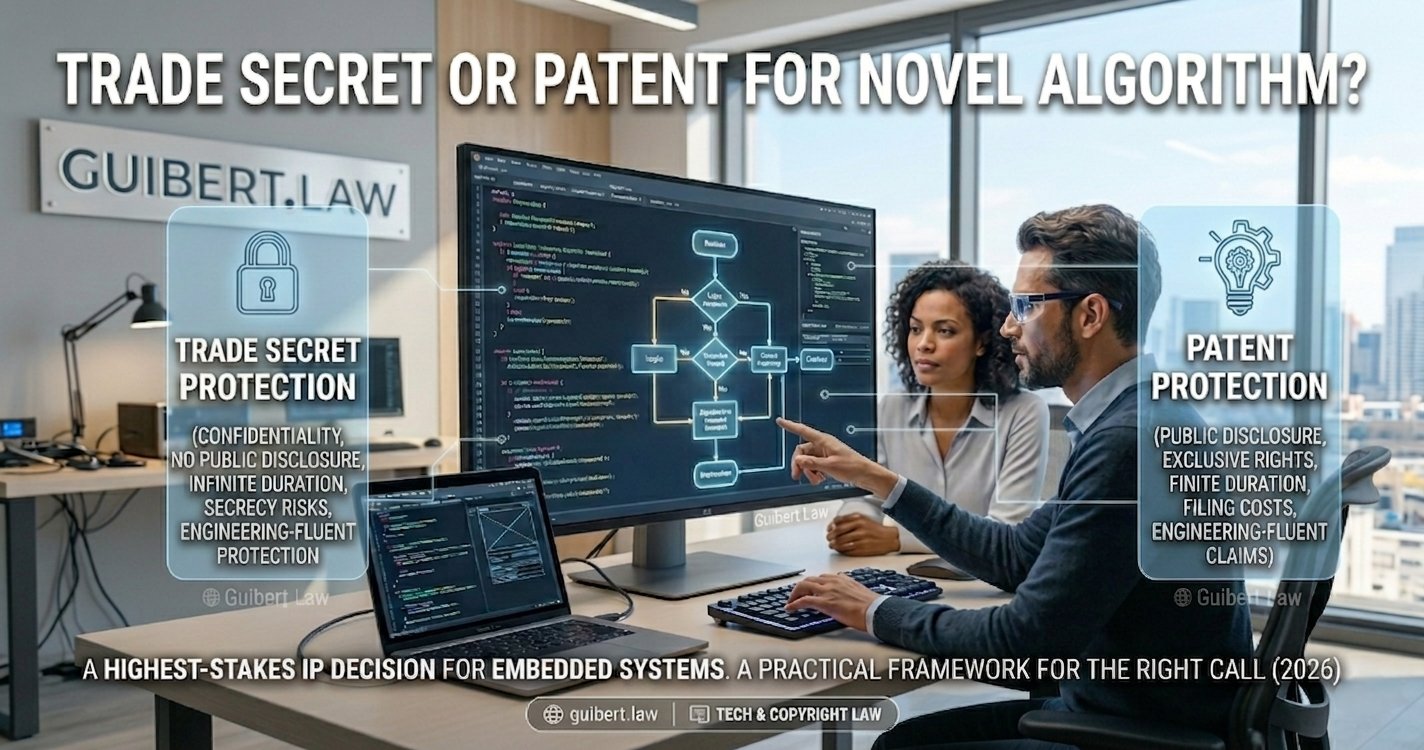
Trade Secrets vs. Patents for Algorithms: A Decision Framework for Embedded Systems Companies

IP & Start-ups
Five IP Mistakes That Derail Technology Start-ups Before Series A

IP & Open Source
Open-Source Licensing Pitfalls That Can Sink Your Embedded Systems Product
IP Strategy
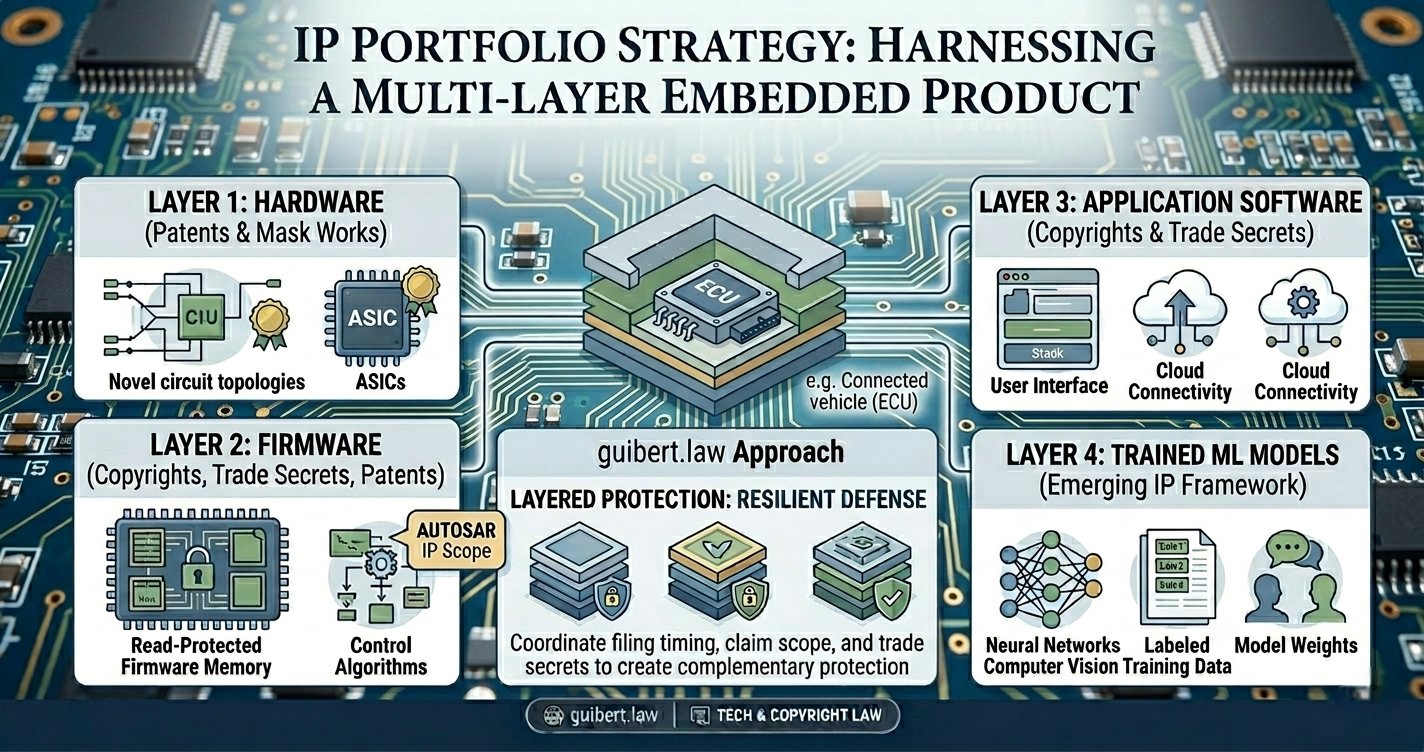
Designing an IP Portfolio Strategy for Hardware-Software Embedded Products